You probably think your car is a loyal friend until it starts blowing smoke at you in the driveway. It is a funny sight but bad valve stem seals symptoms are no joke for your wallet. These tiny rubber bits hold back a mess of hot oil every single day.
Check your tailpipe for blue smoke right after you start the engine in the morning. Watch if your car drinks too much oil between your regular shop visits for a change. Look for dirty spark plugs that have thick black crust on the tips from burning oil. Listen for small ticking sounds coming from the top of the motor when you idle at a red light. Test your engine compression to see if the internal pressure stays steady or drops fast. Clean your exhaust tips to see if oily soot comes back within a few days of driving.
Do You Have Bad Valve Stem Seals Symptoms in Your Car?
Your engine uses oil to keep parts moving smoothly, but that oil must stay in the right spots. The valve stem seals sit at the top of the engine to stop oil from leaking into the combustion chamber. When these seals get old, they get hard and crack like an old rubber band. This lets oil slide down the valve and into the place where your fuel burns.
You will notice the most smoke when the car sits for a long time, like overnight. The oil drips down slowly while the engine is off and puddles on top of the piston. When you turn the key, all that trapped oil burns off at once in a big cloud. It usually looks blue or gray and smells like something is burning in a frying pan.
If you ignore this for too long, your engine will start to run very poorly. The oil ruins the spark plugs and makes it hard for the car to stay running. You might feel the car shake or stumble when you try to speed up on the highway. Fix it soon so you don’t ruin the expensive catalytic converter under your car.
- Blue smoke appears only during a cold start.
- The oil level drops on the dipstick every week.
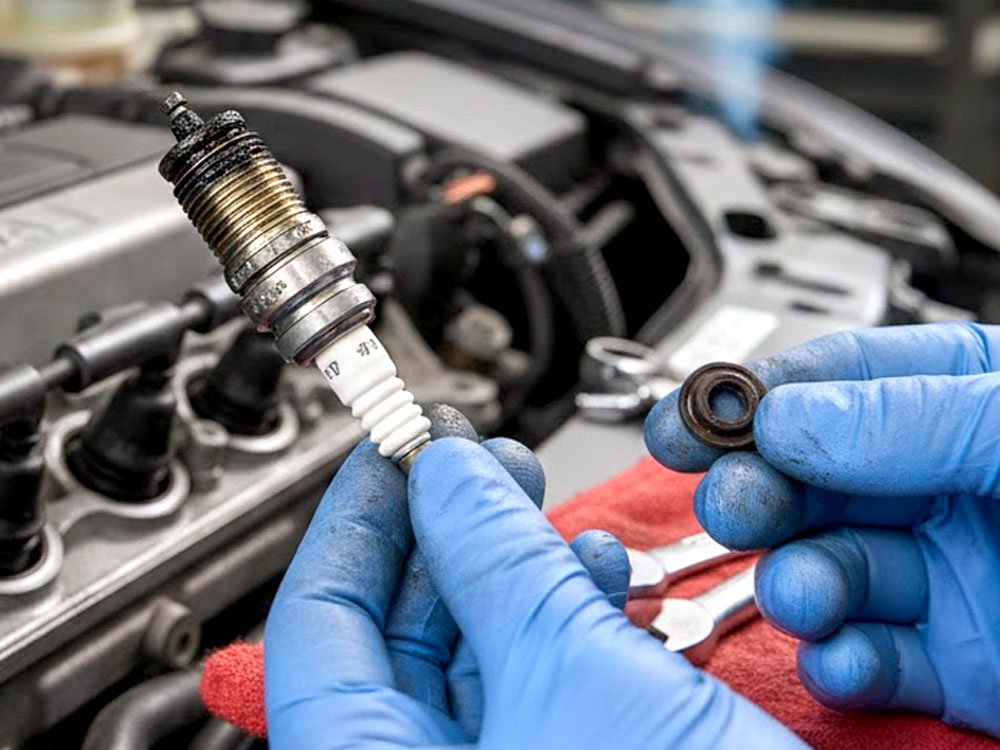
- Spark plugs look oily or covered in black gunk.
- The exhaust smells like burning plastic or heavy oil.
- Engine power feels lower than it did last year.
- Smoke clears up after you drive for five minutes.
Common Bad Valve Stem Seals Symptoms You Need to Know
Blue Smoke On Cold Starts
The most famous sign happens right when you wake up your car in the morning. While you slept, gravity pulled oil through the tiny cracks in your worn out seals. This oil sits waiting in the cylinder until you hit the starter button. Then, it burns away in a quick, thick puff of blue smoke that hangs in the air.
Pro mechanics call this the “morning cloud” because it tells the whole story of your engine. If the smoke goes away after a minute, it is almost certainly the seals and not the piston rings. Piston rings usually smoke all the time, not just at the start. This is a great way to tell the difference without taking the whole engine apart.
Always check your mirrors when you first pull out of your driveway to catch this. Sometimes the wind blows the smoke away before you can walk around to the back. If you see a blue tint in the air, your seals are likely thirsty for a replacement. It is a clear warning that your engine is starting to eat its own lunch.
- Watch for smoke that looks blue or light gray.
- Notice if the smoke disappears as the engine warms.
- Smell the air for a distinct burnt oil scent.
- Ask a friend to stand behind the car during start.
High Oil Consumption
You might find yourself adding a quart of oil every few hundred miles without seeing a leak on the ground. This happens because the oil is leaving through the tailpipe instead of dripping onto your garage floor. It is a slow theft that happens while you drive down the road. You might not see the smoke while driving, but the dipstick never lies to you.
I always tell people to keep a logbook in the glove box to track oil levels. If you notice the level dropping faster as the weeks go by, the seals are getting worse. High heat from summer driving often makes old rubber seals even more brittle and leaky. They just can’t grip the metal valve stem tight enough to keep the oil out anymore.
An insider trick is to check your oil right after a long highway trip. High vacuum pressure when you let off the gas pulls oil through the bad seals very fast. If the level is lower after a big trip, you have your answer. Don’t let the oil get too low or you might lock up the whole engine.
- Check the dipstick every time you fill the gas tank.
- Look for oily residue inside the very end of the tailpipe.
- Keep a spare bottle of oil in the trunk for emergencies.
- Compare your oil use to the factory manual specs.
Fouled Spark Plugs
Your spark plugs need a clean environment to create the tiny lightning bolt that starts the fire. When oil leaks past the seals, it coats the plug in a thick, wet layer of slime. Over time, the heat turns this oil into a hard, crusty carbon shell. This shell blocks the spark and makes your engine misfire or skip a beat.
You can pull a plug out and look at the color to see what is happening inside. A healthy plug looks like toasted bread or a light tan color. A plug suffering from bad seals will look like it was dipped in black tar or heavy soot. This is a surefire sign that oil is invading the combustion chamber from above.
Sometimes you can clean the plugs to get home, but the oil will just come back. Replacing the plugs is only a temporary fix if you don’t swap out those old seals. Most mechanics check the plugs first because they are like a window into the soul of your motor. If they are wet, you have a seal problem that needs your focus.
- Look for wet oil on the threads of the spark plug.
- Check for heavy black crust on the center electrode.
- Listen for a rough idle that feels like a heartbeat.
- Watch for a flashing check engine light on the dash.
Decreased Engine Power
A car with bad seals often feels sluggish when you try to pass someone on the road. This happens because the oil makes the fuel burn poorly and lowers the overall compression. The engine has to work much harder to move the car because the explosions aren’t as strong. It feels like you are trying to run through water instead of air.
I once worked on a truck that felt like it lost fifty horsepower just from leaky seals. The carbon buildup on the valves became so thick that air couldn’t get into the engine. It is like trying to breathe through a straw while you are running a race. Cleaning the valves is part of the fix, but the seals are the root cause.
You might also notice the car takes longer to start up than it used to. The oily plugs struggle to catch fire, especially when the weather gets cold or damp. If your car feels “tired” or lazy, don’t just ignore it as old age. A fresh set of seals can often bring back that snappy feeling you remember.
- Pay attention to how the car climbs steep hills.
- Feel for any hesitation when you stomp the gas pedal.
- Notice if the car needs more throttle to maintain speed.
- Check if your fuel mileage is getting worse every month.
Heavy Smoke During Deceleration
This symptom is a bit tricky but very telling for someone who knows cars. When you take your foot off the gas while moving, the engine creates a strong vacuum. This vacuum acts like a giant straw and sucks oil right through the gaps in the seals. You might see a huge puff of smoke in the mirror when you slow down for a stop.
Most drivers miss this because they are looking ahead at the traffic or the red light. Try to find a long hill and let the car coast down without using the gas pedal. At the bottom of the hill, give it a little gas and look behind you. If a cloud of smoke appears then, your valve seals are definitely the culprits.
This happens because the intake manifold pressure drops very low during coasting. That low pressure is much stronger than the seal’s ability to hold back the oil. It is a classic test that old school mechanics use to diagnose the problem quickly. It proves the oil is coming from the top of the engine and not the bottom.
- Test the car on a long downhill road for smoke.
- Watch the mirrors after letting off the gas at high speeds.
- Look for smoke when you downshift a manual transmission.
- See if the smoke appears right after a long idle.
Odor Of Burnt Oil
The smell of burning oil is very sharp and stays in your nose for a long time. It doesn’t smell like gas or sweet like coolant; it smells like a hot skillet. You might catch a whiff of it while sitting at a stoplight with the windows down. The wind carries the exhaust fumes from the back of the car right to your seat.
Sometimes the oil leaks onto the outside of the engine too, but the seal leak is internal. If the smell comes mainly from the tailpipe, the problem is definitely inside the head. You might also notice your clothes smell like a mechanic shop after a long drive. This is a sign that your exhaust system is full of oily residue.
Don’t ignore your nose because it is often faster than the warning lights on your dash. A strong smell means a lot of oil is leaving the system and entering the air. This isn’t just bad for the car; it is also bad for you to breathe in. It is time to get under the hood and see what is going on.
- Sniff the air around the back of the car after a drive.
- Check if the smell gets stronger when the engine is hot.
- Notice if the cabin air vents smell like burnt grease.
- Keep an eye out for thin wisps of smoke from the hood.
How Do You Test for Bad Valve Seals?
The easiest way to test is the “idling test” which you can do in your own driveway. Start the car and let it sit at a normal idle for about fifteen minutes. This lets the oil build up on the back of the valves while the vacuum is high. Then, quickly stomp on the gas pedal and watch the exhaust for a big cloud.
If you see a sudden burst of blue smoke, you know the seals are leaking. Another way is to perform a leak-down test with a special tool from the parts store. This tool puts air pressure into the cylinder to see where the air escapes. If you hear air whistling through the top of the engine, the valves aren’t sealing right.
You can also look at the intake manifold if you are feeling brave enough to take things apart. If you see paths of wet oil leading down to the valves, the seals are toast. It is like following a trail of breadcrumbs left by the leaking oil. Most of the time, these visual signs are all the proof a good mechanic needs.
- Run the engine at idle for ten to fifteen minutes.
- Rev the engine quickly and check for blue smoke clouds.
- Use a borescope camera to look at the top of valves.
- Check the intake ports for signs of wet oil trails.
- Perform a compression test to check the overall health.
- Inspect the catalytic converter for oily soot or clogging.
Final Thoughts
You now know how to spot bad valve stem seals symptoms before they ruin your engine. Fixing this problem early saves you a lot of money and keeps your car running strong. Don’t feel scared to look under the hood or check your own oil levels today. Taking care of these small parts makes a huge difference for your car’s life. You’ve got this, so go check that tailpipe!
| Symptom | When It Happens | Severity |
| Blue Smoke | Cold Start | Medium |
| Oil Loss | While Driving | High |
| Fouled Plugs | All The Time | High |
| Burnt Smell | When Hot | Medium |
| Power Loss | Under Load | High |
| Rough Idle | At Stoplights | Medium |
Frequently Asked Questions (FAQs)
Is it okay to drive with bad valve stem seals?
You can drive for a little while, but you should not wait too long. The oil burning in your engine will eventually clog your catalytic converter and ruin your spark plugs. This makes the repair much more expensive later on. Keep a close eye on your oil level every day.
Can bad valve seals cause a check engine light?
Yes, they certainly can cause that light to turn on. When oil coats your spark plugs, the engine will misfire because the spark cannot jump the gap. The computer in your car will see this miss and turn on the light. You might see codes for “cylinder misfire” or “O2 sensor.”
Is it expensive to fix valve stem seals?
The cost depends on your specific car and how much work is needed. The parts themselves are actually very cheap, usually just a few dollars for each seal. However, the labor takes a long time because the mechanic has to take the top of the engine apart. It is a big job.
Can I fix valve stem seals without removing the head?
Many mechanics use a special air pressure tool to hold the valves up while they work. This allows them to change the seals without taking the entire cylinder head off the engine. It saves a lot of time and money on gaskets. Ask your shop if they can do this “on-car” repair.
Do valve seal additives actually work?
Some oil additives can help soften old rubber seals for a short period of time. They contain chemicals that make the rubber swell up to stop the leaks. This is usually just a temporary fix to buy you some time. Eventually, the rubber will fail again and you will need new parts.
Can bad valve seals cause the engine to overheat?
Usually, bad seals won’t directly cause the engine to get too hot. However, if you run out of oil because it all burned away, the engine will definitely overheat and fail. Low oil levels mean there is less liquid to carry heat away from the moving parts. Always keep the oil full.
Do I need to replace all valve seals at once?
It is a very good idea to replace all of them at the same time. Since the mechanic is already inside the engine, the extra work to do the rest is very small. If one seal is old and brittle, the others are likely in the same bad shape. Do it once and do it right.
Is blue smoke always a sign of bad seals?
Blue smoke is almost always a sign of burning oil, but it can come from other places too. Worn out piston rings or a bad PCV valve can also cause blue smoke. The timing of the smoke is the best way to tell. Seals smoke most at start-up or when you are slowing down.