You probably think your car sounds like a tractor because of an old muffler. It’s actually more like a ticking time bomb under your hood. Most people ignore that rhythmic tapping until their car simply dies in the middle of a busy intersection. Understanding how long can you drive with a bad camshaft might save your entire engine today.
Check your oil level immediately to see if it looks dirty or metallic. Listen for a loud clicking sound that gets faster when you push the gas pedal. Drive only to the nearest repair shop and avoid high speeds or heavy loads. Scan your car with a code reader to find specific misfire locations. Replace the worn parts before the metal flakes ruin your oil pump and bearings. Watch for a shaking steering wheel or a sudden loss of power while you are driving.
How Long Can You Drive With a Bad Camshaft Before It Fails
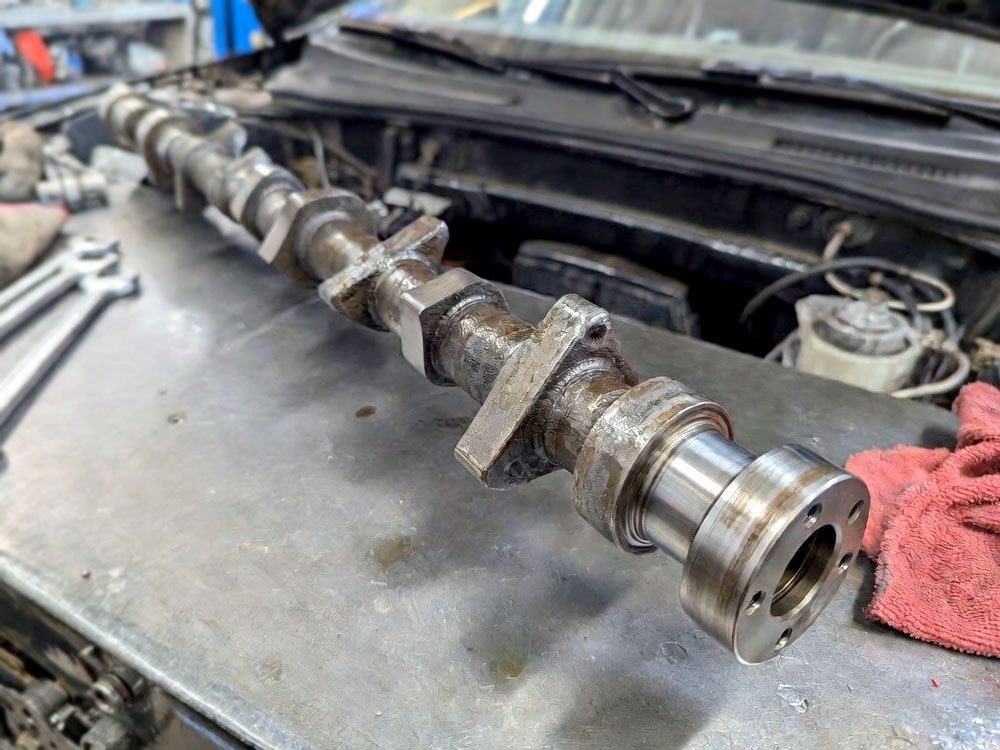
You might be able to drive for a few days or even a few weeks if the wear is very light. The camshaft controls how your engine breathes by opening and closing valves. If the lobes on the shaft start to wear down, the valves won’t open all the way. This makes your car feel sluggish and weak. You will notice the engine struggling to keep up when you try to pass someone on the road.
Driving with this issue is a huge gamble because the metal is literally grinding away. Every mile you drive sends tiny shards of steel through your engine’s internal veins. These bits of metal act like sandpaper on your bearings and pistons. You might get lucky and last 500 miles, but your engine could also seize up tomorrow. It’s best to stop driving as soon as you hear that signature ticking noise from the top of the motor.
A bad camshaft also messes up your fuel economy and makes your car pollutes more. The computer will try to fix the timing, but it can’t fix a physical part that is out of shape. Eventually, the car will start to misfire or backfire through the intake. This can melt your expensive catalytic converter very quickly. If you keep pushing it, you’ll go from a $500 repair to a $5,000 engine replacement.
- Stop driving if the engine starts to shake violently at red lights.
- Listen for a high-pitched squeak that sounds like a dry bird.
- Check for a check engine light flashing on your dashboard.
- Avoid towing any trailers or carrying heavy gear in the trunk.
- Watch for blue or grey smoke coming out of the tailpipe.
- Notice if the car takes a long time to start in the morning.
The Ultimate Guide to Spotting Camshaft Trouble Early
Listen For The Tell-Tale Ticking Sound
The most common sign of a bad camshaft is a steady ticking or tapping sound. It sounds like a spoon hitting a metal pot very fast. This happens because the camshaft lobe isn’t smooth anymore, so it hits the lifter with a gap. You will hear it most clearly when you first start the car or when it’s idling at a stoplight.
Don’t confuse this with normal fuel injector noise which is a soft clicking. A camshaft tick is much deeper and louder. If you open the hood, the sound will seem like it’s coming from the very top of the engine. Use a long screwdriver as a stethoscope by placing the handle against your ear and the tip on the valve cover to find the spot.
I once saw a guy think this was just a loose bolt. He drove it for a month until the camshaft snapped in half. By then, the metal bits had clogged his oil pickup tube. His engine died because it couldn’t get any oil to the top. Always trust your ears when the rhythm of your engine changes suddenly.
- Use a mechanic’s stethoscope to pin down the exact location.
- Change your oil and look for shiny silver flakes in the pan.
- See if the noise goes away after the engine warms up.
- Check if the ticking speed matches the engine RPM exactly.
Watch For Sudden Loss Of Engine Power
A bad camshaft means your engine can’t get enough air or get rid of exhaust. You will feel like you’re pulling a heavy anchor behind your car. When you step on the gas, the engine might rev up, but the car won’t really move faster. This happens because the valves aren’t opening wide enough to let the power happen.
This lack of power usually gets worse as the engine gets hot. Heat causes metal to expand, which can make a worn camshaft lobe even less effective. You might notice the car struggles to climb hills that used to be easy. It’s a frustrating feeling that makes the car feel old and tired overnight.
Pro tip: if your car feels slow, try to see if it’s only at high speeds. A worn cam often kills your “top end” power first. You might be fine driving around the neighborhood at 25 miles per hour. However, trying to get on the highway will feel dangerous because you can’t merge fast enough.
- Test your 0 to 60 time to see if it’s much slower.
- Look for a drop in your average miles per gallon.
- Feel for a “stumble” when you try to accelerate quickly.
- Check if the car feels like it wants to stall at stops.
Identify Engine Misfires And Shaking
When a camshaft lobe is flat, that specific cylinder won’t fire correctly. This creates a misfire that makes your whole car shake. You will feel a rhythmic vibration through your seat or the steering wheel. It feels like the engine is “limping” rather than running smoothly on all its legs.
Misfires are dangerous because they dump raw gas into your exhaust system. This gas can catch fire inside your pipes or ruin your sensors. If your check engine light is blinking, that means the misfire is happening right now. You should pull over immediately because a blinking light is a final warning from your car.
I’ve found that many people try to replace spark plugs first to fix this. While that’s cheaper, it won’t fix a physical bump on a metal rod. If you change the plugs and the shake stays, the camshaft is likely the culprit. Don’t keep buying small parts when the big one is the real problem.
- Read the error codes to see if it’s a “P0300” code.
- Notice if the shaking is worse when the AC is on.
- Smell for unburnt gasoline coming from the back of the car.
- Check if the engine idles roughly but clears up at speed.
Look For Metallic Debris In Your Oil
This is the “insider” way to know your camshaft is toast without taking the engine apart. Drain your oil into a clean pan and hold it up to the sun. If you see what looks like “glitter” or silver swirls, that’s your camshaft melting away. That metal belongs on your parts, not floating in your oil.
These tiny flakes are very sharp and move through every part of your engine. They will ruin your oil pump and scratch your cylinder walls. Once the metal starts moving, the clock is ticking very fast. It’s like having sand inside your blood vessels; it ruins everything it touches.
Always cut open your old oil filter if you suspect a bad cam. Spread out the paper inside and look for chunks of metal trapped in the folds. If you find pieces larger than a grain of salt, stop driving the car immediately. At this point, your engine is eating itself from the inside out.
- Use a magnet in your oil pan to catch steel pieces.
- Check the oil color to see if it looks like metallic paint.
- Run your fingers through the drained oil to feel for grit.
- Keep a sample of the oil to show your mechanic later.
Check For Backfiring Through The Intake
A very bad camshaft can cause the intake valves to stay open when they should be closed. This causes the explosion in the cylinder to shoot back up into the air intake. You will hear a loud “pop” or “bang” coming from the front of the car. It’s startling and can actually crack your plastic intake manifold.
This usually happens when the camshaft timing is off or the lobes are extremely worn. It’s a sign that the engine’s “breathing” is completely out of sync. If you hear popping from the front, your car is telling you it’s about to have a major heart attack. It’s much more serious than a simple muffler backfire.
In my shop, I tell people that an intake backfire is the “point of no return.” It means the valves and pistons are very close to hitting each other. If they touch, the engine is usually destroyed instantly. Save yourself the massive bill and get a tow truck the moment you hear that popping.
- Listen for a “chuffing” sound coming from the air box.
- Check if your air filter has any soot or burn marks.
- Watch for a sudden puff of smoke from under the hood.
- Notice if the car jerks forward when it pops.
Pay Attention To The Check Engine Light
Your car has sensors that watch the camshaft position every second. If the shaft is worn or wobbly, the sensor will send a warning to the computer. This triggers the check engine light on your dashboard. Often, the code will specifically mention “Camshaft Position Sensor” or “Timing Correlation.”
Many people just replace the sensor and think the problem is fixed. However, the sensor is often just reporting the truth about a bad metal part. If you put in a new sensor and the light comes back in a day, the camshaft itself is bad. The sensor is the messenger, so don’t blame it for the bad news.
You can buy a cheap code reader at any auto store to see what’s wrong. If you see codes like P0011 or P0016, your camshaft system is failing. These codes tell you exactly which side of the engine is having the most trouble. It’s like having a doctor tell you exactly where it hurts before you even feel it.
- Get a free code scan at a local auto parts store.
- Write down the specific code numbers for your mechanic.
- Don’t just clear the code and hope it stays away.
- See if the light comes on only when the engine is hot.
Can You Fix A Bad Camshaft Without Replacing It
The short answer is no, you cannot truly fix a worn camshaft lobe. Once the hardened metal surface is gone, it will keep wearing down faster and faster. Some people try to use “thicker oil” or “oil additives” to quiet the noise. This might hide the sound for a few days, but it won’t put the metal back on the shaft.
Think of it like a hole in your tooth; a filling might help, but you can’t just wish the tooth back to health. Using thick oil can actually be bad for modern engines with tight spaces. It might make the ticking quieter, but it’s still grinding away. You are just hiding a fire under a blanket instead of putting it out.
The only real fix is to pull out the old camshaft and put in a new one. While you are in there, you must also replace the lifters or followers. If you put a new cam on old lifters, the old lifters will ruin the new cam in minutes. Do the job right the first time so you don’t have to do it twice.
- Avoid “engine honey” products that claim to fix worn parts.
- Ask your mechanic about “regrinding” if it’s a rare classic car.
- Always buy a “cam kit” that includes new lifters and assembly lube.
- Ensure your oil passages are cleaned out during the repair.
- Check your timing belt or chain while the engine is open.
- Budget for a full oil and filter change after the first 500 miles.
Final Thoughts
Dealing with engine issues is scary, but you’ve got this. Keep a close eye on your car’s sounds and how it feels on the road. Knowing how long can you drive with a bad camshaft helps you make a smart choice. If you hear that ticking, don’t wait until you’re stranded. Take your car to a pro today and keep your engine running for a long time.
| Issue Type | Symptoms to Watch For | Danger Level | Estimated Repair Cost |
| Worn Lobe | Light ticking, slight power loss | Medium | $800 – $1,500 |
| Flat Lobe | Constant misfire, heavy shaking | High | $1,200 – $2,500 |
| Broken Cam | Engine won’t start, loud clunk | Critical | $4,000+ (New Engine) |
| Bad Sensor | Check engine light, stalling | Low | $150 – $300 |
Frequently Asked Questions (FAQs)
Is it safe to drive with a camshaft sensor code?
It is not very safe to drive for long with a camshaft sensor code. This sensor tells the engine when to spark and when to spray fuel. If it fails, your engine might die while you are driving at high speeds. This can cause you to lose power steering and brakes. You should get it fixed quickly to avoid a crash.
Can a bad camshaft ruin my entire engine?
Yes, a bad camshaft can absolutely destroy your whole engine if you ignore it. The metal flakes from the worn lobes travel through the oil to other parts. These flakes scratch the bearings that hold the crankshaft and pistons. Eventually, the engine will seize up or “throw a rod.” At that point, you will need a whole new engine.
Do I need to replace lifters with a new camshaft?
You must always replace the lifters when you get a new camshaft. Lifters and camshafts “wear in” together to create a matching surface. If you put an old lifter on a new cam, it will act like a cheese grater. It will chew up the new camshaft in just a few miles of driving. It is a vital step for a lasting fix.
Can I drive my car to the mechanic with a ticking cam?
You can usually drive your car to a local mechanic if the ticking is light. However, you should not drive it for long distances or on the highway. If the noise is very loud or the car is shaking, you should call a tow truck instead. It is cheaper to pay for a tow than to pay for a whole new engine block.
Is it expensive to fix a camshaft problem?
Fixing a camshaft can be expensive because it requires a lot of labor. The mechanic has to take off the top of the engine to reach the parts. Depending on your car, it can cost between $800 and $2,500. Parts are often a few hundred dollars, but the work takes many hours. It is still cheaper than buying a different car.
Can low oil cause my camshaft to go bad?
Low oil is the most common reason a camshaft fails in the first place. The camshaft sits at the very top of the engine, so it’s the last part to get oil. If your oil is low, the cam runs dry and gets very hot. This heat melts the metal and causes it to wear down fast. Always keep your oil full.
Do I have to change my oil after a camshaft replacement?
You definitely need to change your oil right after replacing a camshaft. Most mechanics will change it twice. They change it once during the repair and again after about 500 miles. This is because the new parts “break in” and create tiny bits of metal. You want to wash those bits out so they don’t cause any new damage.
Is it worth fixing a bad camshaft on an old car?
It depends on the overall value and condition of your old car. If the car is in great shape otherwise, a new camshaft can give it many more years of life. However, if the car has a lot of rust or other big problems, the repair might cost more than the car is worth. Ask your mechanic for an honest opinion.