You probably think a broken timing belt means your engine is now a very expensive paperweight. It’s a scary feeling when the car just stops. But you can actually find out the truth quickly. Learning how to check for bent valves without removing head will save you time and money.
First, you need to clear the area around the spark plugs and remove them all so the engine spins easily. Then, you should perform a cold compression test by cranking the engine with a gauge to see if any cylinder fails to hold air. If a cylinder shows zero pressure, you then use a leak-down tester to listen for air escaping through the intake or exhaust. Finally, you can use a cheap borescope camera to look inside the spark plug hole for any shiny marks on the piston tops.
Can You Really See Damage Without Taking the Engine Apart?
You can definitely find damage without taking the top of the engine off. Mechanics do this every day to save time. It’s all about using air pressure and small cameras. These tools act like your eyes inside the dark metal parts. You don’t need to be a pro to try these tricks.
Most people assume the worst when they hear a loud pop. But sometimes you get lucky. A simple test tells you if the valves are straight or tucked away safely. You just need to follow a few steps. It’s much better than spending hours taking bolts out for no reason.
The process is very logical. If a valve is bent, it won’t close all the way. This means air will leak out when it should stay trapped. You are basically checking for a good seal. If the seal is gone, you know the valve is bad.
- Buy a basic compression gauge from a local shop.
- Grab a small USB borescope camera for your phone.
- Make sure your battery is fully charged first.
- Remove all spark plugs to stop the resistance.
- Listen for hissing sounds in the tailpipe or intake.
- Watch for a needle that stays at zero.
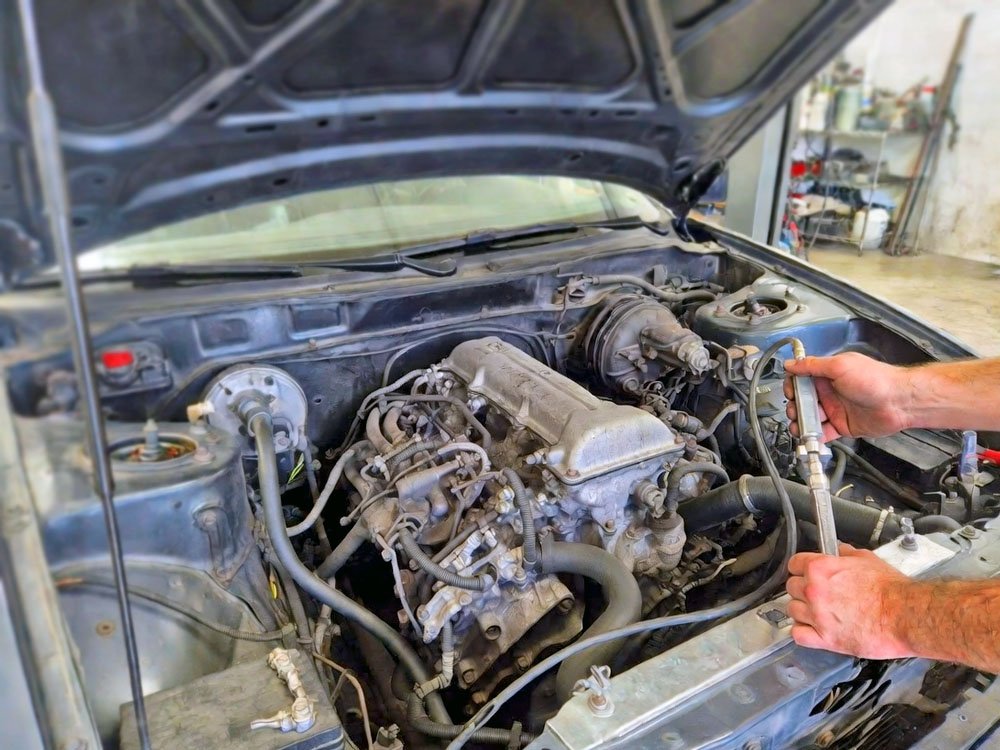
How to Check for Bent Valves Without Removing Head the Right Way
Use a Compression Tester First
The compression test is your first line of defense. You thread the gauge into the spark plug hole and turn the key. If the needle jumps up high, your valves are likely fine. If it stays at zero, you have a problem. This test is fast and tells you which cylinder is hurting.
I always tell my friends to do this twice. Sometimes the gauge doesn’t sit right the first time. You want to see consistent numbers across all the holes. A big drop in one spot is a huge red flag. It usually means a valve is stuck open.
One insider tip is to add a tiny drop of oil if the numbers are low. If the numbers stay low even with oil, it’s almost certainly a bent valve. Oil seals the rings but it can’t fix a bent piece of metal. This helps you rule out piston ring issues immediately.
- Disable the fuel pump so gas doesn’t spray.
- Hold the throttle wide open while cranking.
- Crank the engine for about five strong pulses.
- Compare the highest number to the lowest one.
Try the Leak Down Test
A leak-down test is like a doctor’s checkup for your engine. You pump steady air into the cylinder while it’s at the top. The gauges show you how much air is escaping. It is much more detailed than a simple compression test. You can actually hear where the air goes.
This is where you use your ears. If you hear hissing from the tailpipe, an exhaust valve is bent. If the sound comes from the air filter box, an intake valve is the culprit. It’s a very simple way to pinpoint the exact part that broke. You don’t even have to guess.
I like to use a long screwdriver in the spark plug hole to find the top of the stroke. Just be gentle so you don’t scratch anything. When the piston is at the very top, both valves should be closed tight. If they aren’t, the air will tell on them.
- Connect your tool to a steady air compressor.
- Find top dead center for the specific cylinder.
- Listen at the oil fill cap for ring leaks.
- Check the radiator for bubbles in the coolant.
Use a Borescope Camera
A borescope is a tiny camera on a long wire. You can buy one for very cheap online these days. You just slide it down the spark plug hole and look at the screen. It lets you see the top of the piston and the valves. This is the closest you can get to taking the head off.
Look for “eyebrows” or half-moon marks on the piston. These marks happen when the valve hits the metal. If you see shiny silver nicks, you know the timing skipped. It is a very clear sign of trouble. You can also see if a valve is sitting crooked.
One trick I use is to rotate the engine by hand while watching the screen. You can see the valves move up and down. If one valve stays still while the others move, it’s definitely broken. This visual proof is very helpful before you buy expensive parts.
- Use a camera with a side-view mirror tip.
- Make sure the LED light is on high.
- Clean the tip if it gets oily inside.
- Take photos of the damage for your records.
Rotate the Crankshaft by Hand
You should always try to turn the engine with a big wrench. Put the wrench on the large bolt at the bottom of the engine. Turn it slowly in a clockwise direction. If it hits a hard stop and won’t move, don’t force it. That is likely a valve hitting a piston.
This method is very “old school” but it works wonders. You get a feel for the engine’s health through your hands. A healthy engine will have smooth spots and tough spots as it builds pressure. A broken one might feel crunchy or get stuck completely.
Keep the spark plugs out while you do this. It makes the engine much easier to turn. If you feel a “clunk” sound, stop right away. That sound is a warning that metal is hitting metal. It’s a fast way to know you shouldn’t try to start the car.
- Use a long breaker bar for more leverage.
- Remove the serpentine belt to reduce extra drag.
- Mark the pulley with chalk to track turns.
- Never use the starter motor to find blocks.
The Paper Test on the Exhaust
The paper test is a funny little trick that actually works. You hold a thin piece of paper near the tailpipe while someone cranks the engine. The paper should always blow away from the pipe. If the paper gets sucked back toward the pipe, you have a problem.
This happens because a bent valve stays open. When the piston moves down, it sucks air in from the exhaust pipe. This “back-puffing” is a classic sign of a valve that can’t close. It’s a quick test you can do with a simple sticky note.
I’ve seen people catch major issues just by watching a dollar bill at the tailpipe. It’s not a perfect science, but it’s a great hint. If the paper stays steady or blows out, your exhaust valves might be okay. If it flutters inward, start looking for tools.
- Hold the paper about an inch from the tip.
- Use a helper to turn the ignition key.
- Watch for a rhythmic sucking motion of the paper.
- Keep your hands away from any moving belts.
Check Valve Train Clearance
You can pull the valve cover off without removing the whole head. This is the thin metal lid on the very top. Once it’s off, you can see the springs and rockers. You can check the “lash” or the gap between the parts. A huge gap usually means a bent valve.
When a valve bends, it often gets stuck slightly open. This leaves extra space at the top of the stem. You can wiggle the rocker arm with your fingers. If it feels very loose compared to the others, that valve is likely bent. It’s a very physical way to test.
I always use a feeler gauge to be sure. Check the numbers in your car’s manual. If one valve has a gap that is way too big, it’s a bad sign. It means the spring couldn’t pull the valve back up all the way because the stem is crooked.
- Clean the area before opening the cover.
- Look for broken or dropped valve springs.
- Check if all the retainers are still level.
- Feel for any rockers that feel “floppy.”
Is It Worth Fixing an Engine With Bent Valves?
Deciding to fix your car depends on its overall value and the damage found. If only one or two valves are bent, a machine shop can often fix the head for a few hundred dollars. However, if the pistons have deep holes or cracks, the whole engine might be toast. You have to look closely at the cost of parts versus a used engine.
Most of the time, the cylinder head takes the hit while the bottom stays okay. You can send the head out to be refreshed. They will put in new valves and seals. Then you just bolt it back on with a new gasket. It is much cheaper than buying a whole new car.
If the car is very old and has other problems, it might be time to move on. Labor costs at shops can be very high for this job. If you can do the work yourself, it’s almost always worth saving. Just make sure you check the cylinder walls for scratches too.
- Get a quote from a local machine shop.
- Check the price of a used “low-mile” engine.
- Factor in the cost of a new timing kit.
- Look at the resale value of the car.
- Check for any damage to the piston tops.
- Think about how long you plan to keep it.
| Tool Name | Difficulty | Cost | Accuracy |
| Compression Gauge | Easy | $30 | Medium |
| Leak Down Tester | Medium | $60 | High |
| Borescope Camera | Easy | $25 | Very High |
| Wrench / Socket | Easy | $10 | Low |
| Paper Test | Very Easy | $0 | Low |
| Feeler Gauges | Medium | $15 | High |
Final Thoughts
Checking your engine doesn’t have to be a nightmare. You can use these simple tests to see if your valves are okay. Most of these tools are cheap and easy to use in your driveway. Take your time and follow the steps carefully. You will feel much better once you know exactly what is wrong. You’ve got this! Just start with the basics of how to check for bent valves without removing head.
Frequently Asked Questions (FAQs)
Is it possible to drive with a slightly bent valve?
You should never try to drive with a bent valve. Even if the car starts, it will run very poorly and miss fire. The extra heat can melt the valve or cause it to snap off. If it snaps, it will fall into the engine and destroy everything. It’s much safer to fix it now.
Can I fix a bent valve without taking the head off?
No, you cannot fix the valve itself while it is still in the engine. You can only test and diagnose it from the outside. To replace the part, you must remove the cylinder head. This allows you to reach the valves and the guides. There are no shortcuts for the actual repair.
Do I need a professional to use a leak down tester?
You don’t need to be a pro, but you do need an air compressor. The tool is fairly simple to read once you understand the gauges. One gauge shows the pressure going in, and the other shows the pressure staying. If you can follow instructions, you can do this at home.
Is a borescope camera better than a compression test?
Both tools are useful for different reasons. A compression test tells you if there is a leak, but it doesn’t show you why. A borescope camera gives you a visual look at the damage. Using both together is the best way to be 100% sure about your engine’s health.
Can a broken timing belt always cause bent valves?
It depends on your engine type. Some engines are “non-interference,” which means the valves and pistons never touch. In those cars, a broken belt won’t bend anything. Most modern cars are “interference” engines, though. In those, a broken belt almost always leads to bent valves and internal damage.
Do I have to replace all the valves if only one is bent?
You don’t have to replace them all, but it is often a good idea. Since the head is already off, a machine shop can clean and lap all the valves. This ensures a perfect seal across the whole engine. Replacing just one is okay if you are on a very tight budget.
Can I use a smartphone for the borescope test?
Yes, most cheap borescope cameras plug right into your phone’s charging port. You just download a free app to see the video feed. It makes the job very easy because you can hold the screen right next to the engine. You can even take videos to show your mechanic later.
Is it expensive to buy the testing tools?
The tools are actually very affordable. You can get a compression tester and a borescope for less than sixty dollars total. This is much cheaper than paying a shop for an hour of labor. Plus, you get to keep the tools for the next time you have a car problem.